Why Nearly a Third of NDIS Funding Goes Unspent (And How Strategic Support Coordination Fixes It)
Receiving an approved National Disability Insurance Scheme (NDIS) plan is a major milestone, yet for hundreds of thousands of Australians, receiving the funding is only half the journey. National scheme data consistently highlights a troubling reality: across Australia, the average plan utilisation rate sits between 70% and 76%. This means that roughly one-quarter to nearly a third of all allocated NDIS funding is returned unspent at the end of each plan cycle.
Unutilised funding does not indicate that a participant has fewer needs or has achieved complete independence. Instead, it is the direct symptom of administrative hurdles, provider bottlenecks, and structural confusion.
Leaving funds unspent carries real risks. Beyond missing out on essential allied health therapies, assistive equipment, or community participation, significant budget surpluses can lead NDIA planners to assume funding is excessive, resulting in reduced budgets during future plan reassessments.
The Real Reasons Behind Low NDIS Plan Utilisation
Why do so many participants struggle to spend their allocated budgets? The barriers generally fall into four key categories:
1. Plan Paralysis and Fear of Overspending
The rules governing NDIS categories can feel overwhelming. Many participants worry that using funds for a specific service will lead to unexpected out-of-pocket bills or breach compliance rules. This fear often leads to extreme caution, causing participants to ration their funds and finish their plan period with substantial surpluses.
2. Allied Health Waitlists and Regional Gaps
Finding qualified occupational therapists, speech pathologists, and physiotherapists with immediate availability can take months, especially in regional hubs like Wagga Wagga, Albury, and Wodonga. A participant might have funding approved for therapy, but if they spend six months on a clinic waitlist, that portion of their budget inevitably goes unused.
3. Misunderstanding Budget Flexibility
While some categories (such as Stated Supports or specific Capital items) are strictly fixed, Core Support budgets often provide considerable flexibility. Many participants are unaware that unused personal care funds can frequently be redirected towards community access, social skill development, or approved transport supports to meet changing everyday needs.
4. The Complexity of Multiple Service Agreements
Managing multiple service providers—each with their own service agreements, cancellation policies, and billing schedules—requires significant administrative effort. Without structured oversight, service gaps arise, appointments are missed, and planned hours fall behind schedule.
How Strategic Support Coordination Fixes the Utilisation Gap
Support Coordination is not just administrative assistance; it is a strategic service funded within your Capacity Building budget to ensure your plan translates into real-world independence.
1. Plan Unpacking and Monthly Burn-Rate Tracking
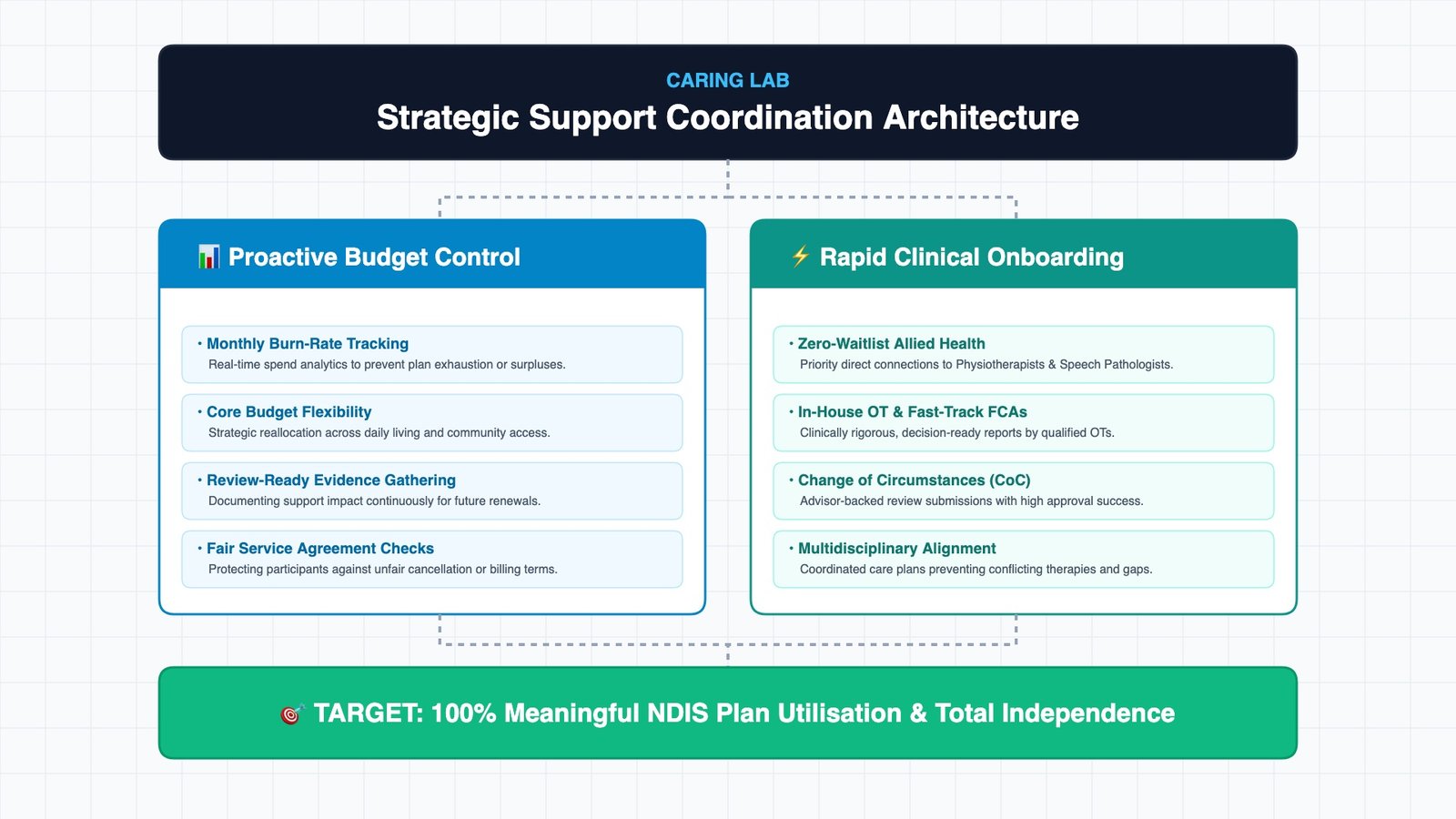
A dedicated Support Coordinator immediately breaks down your plan into actionable monthly budgets. By establishing a clear spending rhythm early, they ensure you neither exhaust your budget prematurely nor leave funds stranded in the final weeks of your plan.
2. Fast-Track Provider Connections and Waitlist Navigation
Experienced coordinators maintain established networks of allied health clinicians, mobile therapists, and support worker agencies. Instead of leaving you to navigate waitlists alone, a coordinator matches you with available, qualified professionals who can begin services immediately.
3. Resolving Provider Friction and Contract Negotiation
Your coordinator reviews service agreements before you sign, ensuring line items match current NDIS Pricing Arrangements and that cancellation clauses are fair. If a provider fails to deliver satisfactory service, your coordinator mediates or transitions you to a better alternative without interrupting your routine.
4. Managing Mid-Plan Changes (Change of Circumstances)
When health, housing, or informal care arrangements change, a strategic coordinator identifies the issue early. Rather than letting an outdated plan sit underutilised, they organise updated Functional Capacity Assessments (FCAs) and lodge a Change of Circumstances (CoC) review backed by solid clinical evidence.
Maximising Your NDIS Potential
Your NDIS funding is an investment in your independence, mobility, and future. Strategic Level 1 and Level 2 Support Coordination ensures every allocated dollar is deployed effectively, keeping you in complete control of your support journey.